


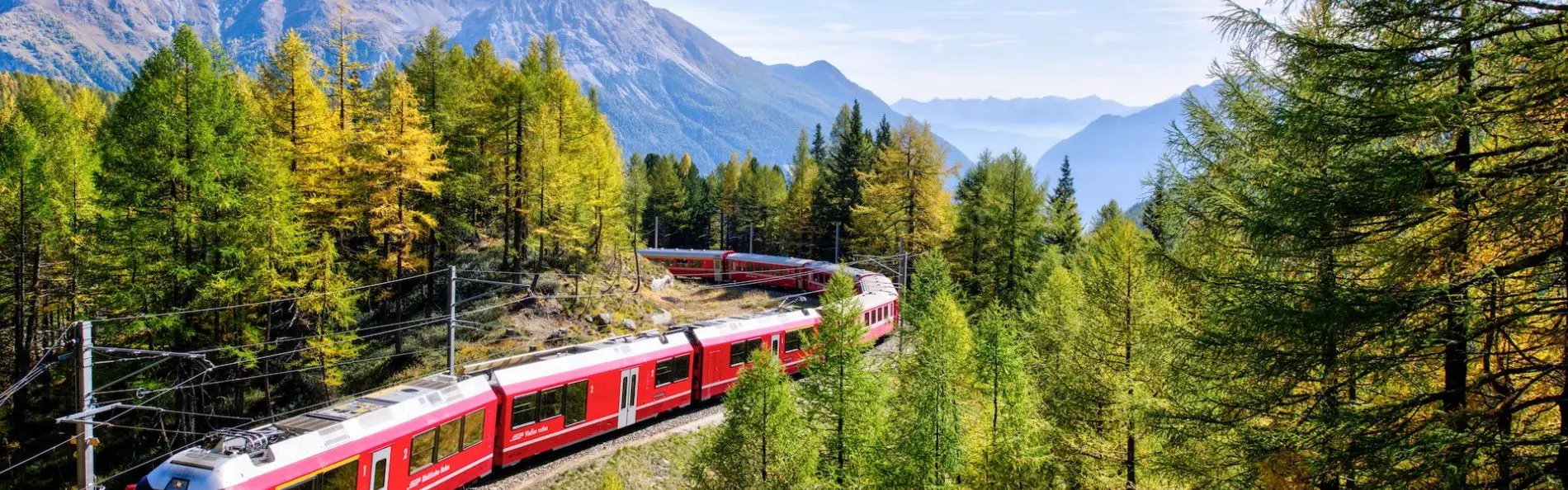
How to travel by train with your bike?
Are you planning a cycling holiday in France? What a joy - and what a pleasure - to leave the car behind and travel with your two wheels. However, when you decide to go a bit farther than your doorstep, taking the train can be useful to save time and get closer to your destination. Unfortunately, trains and bikes don’t always go hand in hand, and it’s not always easy to navigate the SNCF regulations. So, how do you travel by train with your bike?
SNCF rules for traveling by train with your bike
-
Easier travel for folding and disassembled bikes
If you want to make things much easier for yourself, you need either to have a folding bike, or to dismantle your bike and store it in a protective cover during each journey. This way, the door opens to you regardless of your destination or the train you take. In both cases, your bike is considered as luggage and must not exceed 120 cm by 90 cm.
That said, since a folding bike is not suitable for long, performance-oriented rides, bike covers are heavy and bulky, and dismantling your bike every time you want to board a train is not very practical, let’s look at the options for a non-dismantled bike.
-
Rules for a non-dismantled bike
Bringing your bike on board a train is not always straightforward. To do so, you need to choose the right type of train.
On TGV and Intercités trains, you must reserve a dedicated bike space. A seat is then assigned next to it. This means that a cyclist cannot travel alongside a non-cyclist in the same booking. The cost is €5 on an Intercités train and €10 on a TGV. Be aware that some trains do not have any dedicated bike spaces at all.
On TER trains, traveling with a bike is easier. They offer a free space for a limited number of bikes, and no reservation is usually required. However, some regions such as Brittany, the South, or Pays de la Loire do use a reservation system. It’s best to check directly with them before departure so you can plan accordingly. Trains have a variable number of spaces, and bikes are allowed depending on availability. In busy periods, access may be denied if the train is full.
As for public transport in the Île-de-France region, bikes are accepted free of charge outside peak hours: before 6:30 am, between 9:30 am and 4:30 pm, and after 7:30 pm on weekdays, as well as all day on weekends and public holidays.
Tips for planning a train holiday
-
Finding your train and booking your ticket
It is recommended to do your research before departure so you don’t find yourself unprepared at the last minute. Unfortunately, the SNCF website is not always precise. It has a tendency to highlight TGV trains at the expense of TER services and does not always reflect the real possibilities of regional transport.
On SNCF Connect, if you’re lucky and your train accepts bicycles, expand the options and select “+ a bike,” then specify “not dismantled.” If this option is not available, you’ll need to keep searching. Some experienced cyclists recommend the Deutsche Bahn website.
Another method is to browse the SNCF website of the region you are visiting. Generally, it allows you to choose your train and exclude TGV options. On regional websites, you’ll also find the network map with detailed routes, as well as timetables. These schedule sheets indicate whether bikes are allowed on each train.
Have you managed to plan your route? Great - now here are a few tips to help you handle the final stage of your bike-and-train journey: the trip itself.
-
Stay relaxed during your journey
On the day of departure, at the station, it’s not always easy to reach the platform. Improvements have been made in recent years to enhance accessibility, but you may still need to carry your bike up steps. It’s best to arrive at least 30 minutes before your train departs so you can ask for information at a ticket desk or from a conductor.
Once on the platform, boarding the train can also be challenging. Doors are sometimes too narrow, and you may need to hang your bike in a designated space, which requires both strength and balance. Carriages can be crowded with other passengers’ luggage or bikes. You’ll need to make a bit of space for yourself—provided the conductor doesn’t refuse you access to the train.
In short, as you’ve probably gathered, traveling by train with your bike can be complex in France. It requires careful planning in advance to stay calm on the day of departure. The golden rule is anticipation. If you want to travel stress-free, Safran Tours offers turnkey cycling holidays. Our agency takes care of all the logistics and can even transport your luggage if needed.
How to travel by train with your bike in France? Discover the steps to follow and all our tips.
Our top cycling trips accessible by train
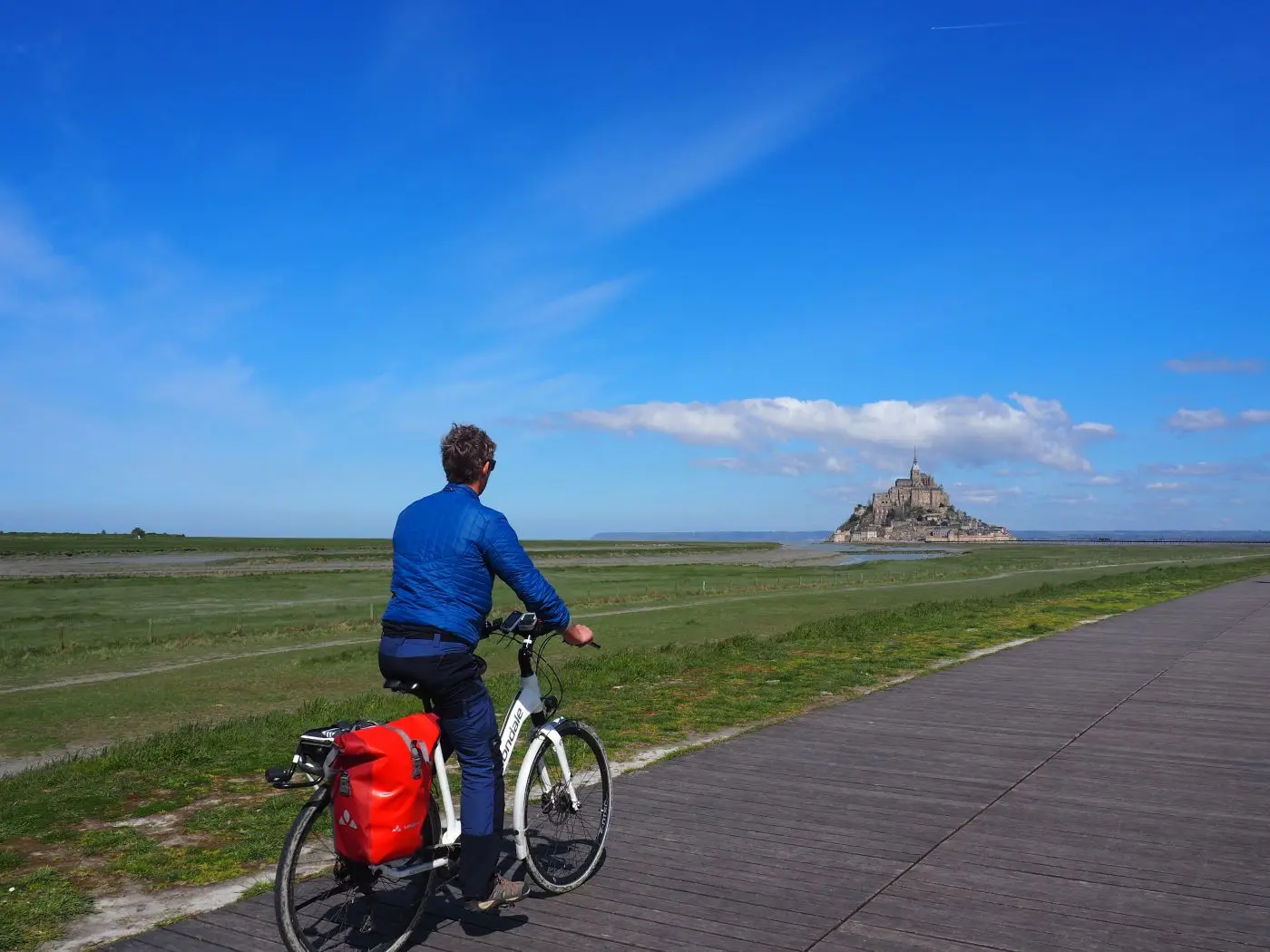
From Rennes to Mont Saint-Michel
A route that gently stretches toward the ocean, along canals, locks, and charming towns, all the way to the iconic silhouette of Mont Saint-Michel.
Discover the trip →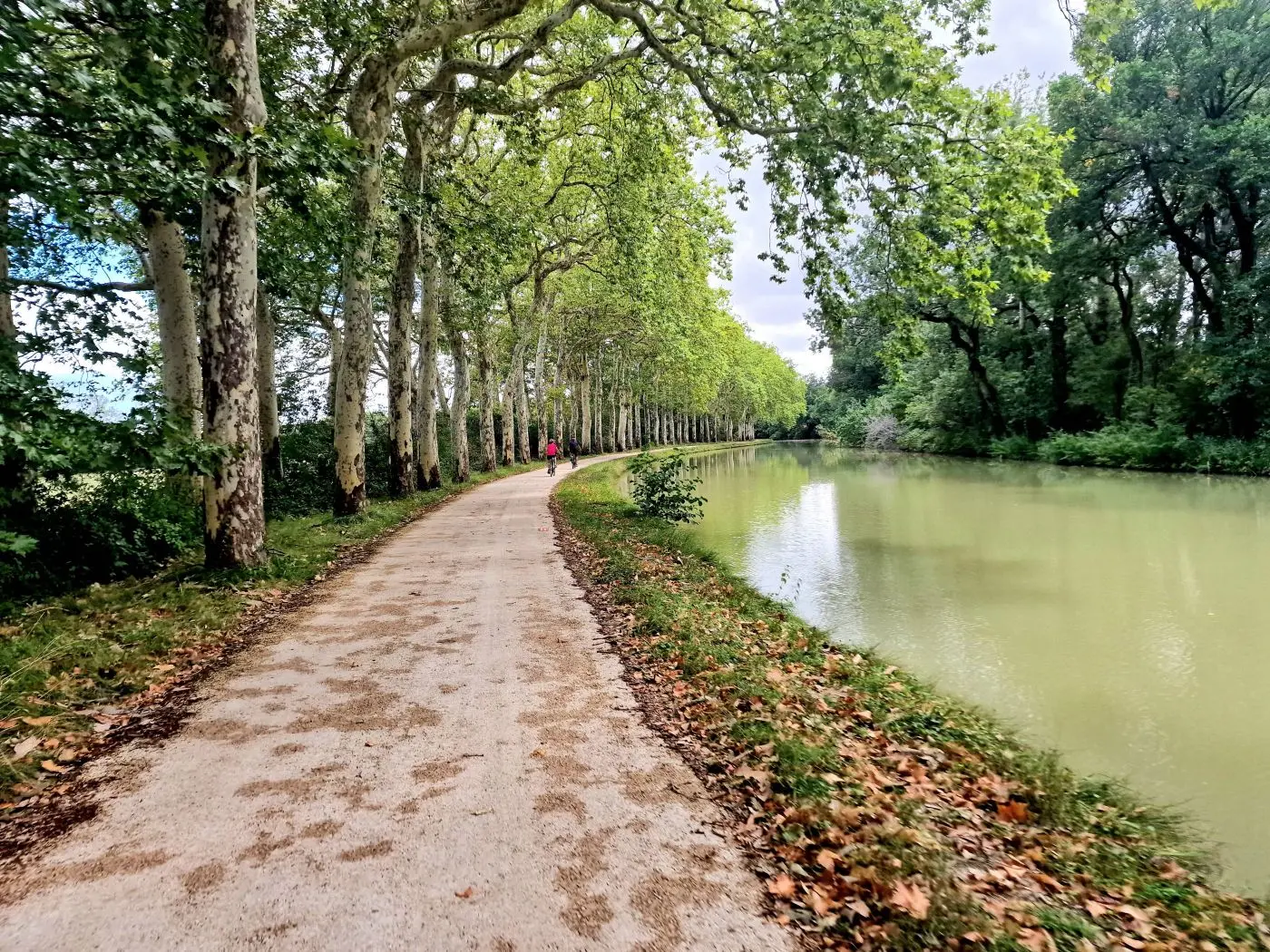
The Canal du Midi from Toulouse to Sète
A peaceful, sunlit journey where you move forward carried by the softness of the South and a taste for simple pleasures.
Discover the trip →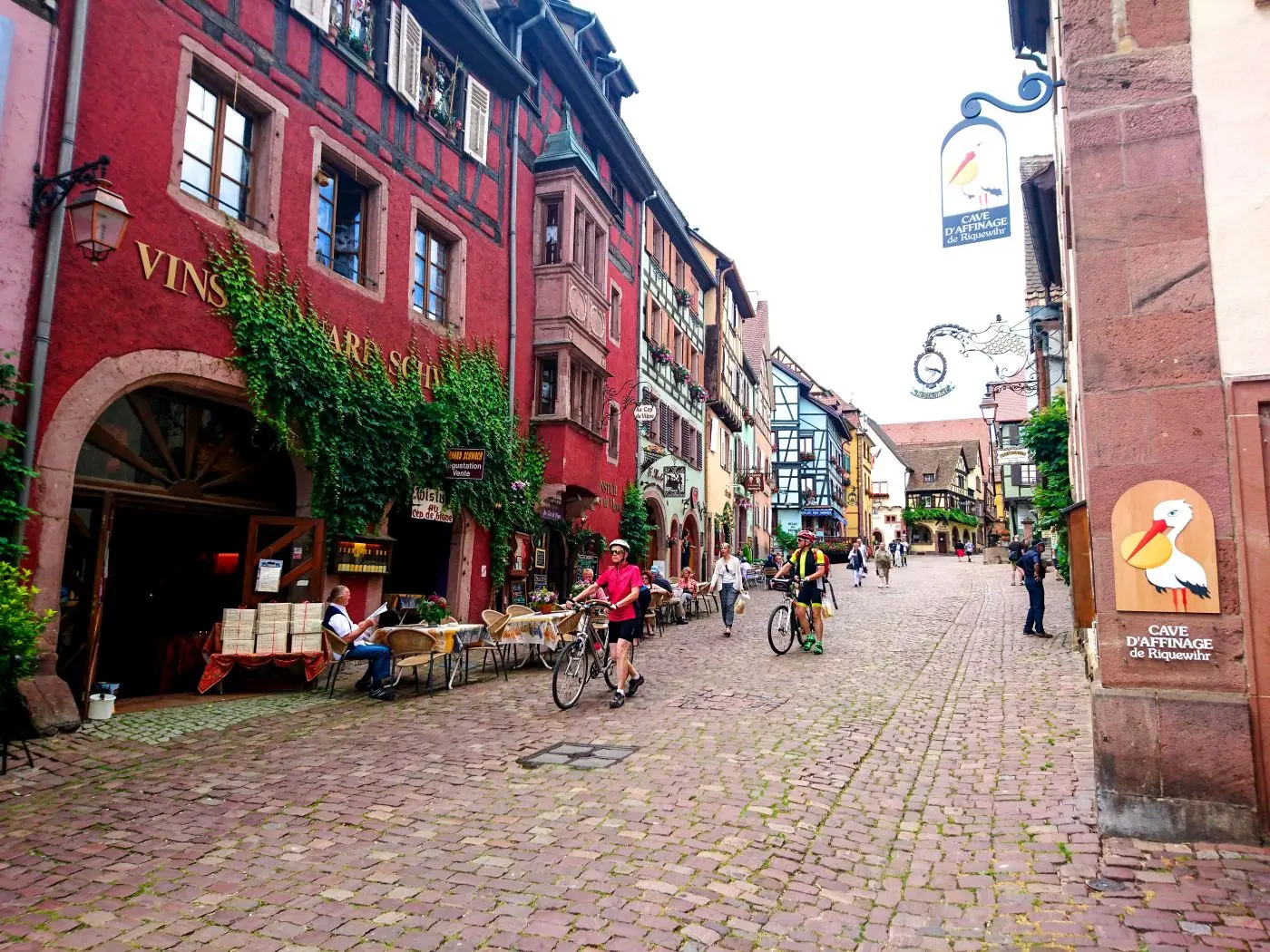
Alsace from Strasbourg to Colmar
Villages, vineyards, and gourmet stops punctuate this generous route, blending heritage with a gentle way of life.
Discover the trip →